
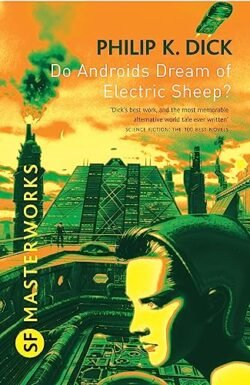
“Do Androids Dream of Electric Sheep?” by Philip K. Dick is a landmark science fiction novel set in a post-apocalyptic future where Earth is devastated by nuclear war, leading to widespread desolation and the extinction of many animal species. The story follows Rick Deckard, a bounty hunter employed to identify and “retire” rogue androids that have fled to Earth. These androids, indistinguishable from humans except for their lack of empathetic capacity, challenge the very notion of what it means to be human. As Deckard tracks down these androids, he is forced to confront his own morality, empathy, and the value of artificial life. Character Analysis Rick Deckard: Rick Deckard, the novel’s protagonist, embodies the moral and existential quandaries central to the story. As a bounty hunter of androids, his job requires him to suppress his empathy—a trait that distinguishes humans from androids in the novel’s universe. Deckard’s encounters with advanced Nexus-6 model androids, who exhibit sophisticated emotional responses, force him to question the ethics of his work and the nature of his own humanity. Androids (Andys): The androids, or “andys,” primarily the Nexus-6 models, challenge preconceived notions of artificial intelligence and soullessness. Characters like Rachael Rosen and Pris Stratton are particularly instrumental in blurring the lines between human and machine. Their complex behaviors, emotions, and desires for self-preservation prompt readers to reconsider the boundaries of empathy and the rights of sentient beings, regardless of their origin. Themes and Analysis Empathy as a Measure of Humanity: The novel posits empathy as the defining trait of humanity, explored through the empathy test used to identify androids and the characters’ interactions. The Value of Life: Whether through Deckard’s moral conflict or the androids’ fight for survival, the narrative probes the value of life in a world where the line between organic and artificial life is blurred. “Do Androids Dream of Electric Sheep?” offers a profound exploration of identity, empathy, and ethics within the framework of a dystopian future. Philip K. Dick masterfully crafts a narrative that is as engaging as it is thought-provoking, pushing readers to question the essence of humanity in the face of advanced artificial intelligence. The novel’s enduring relevance speaks to ongoing debates about AI, making it a seminal work in science fiction and beyond. Rick Deckard’s journey through a decaying world where androids dream of life serves as a compelling meditation on what it means to be truly human. “Do Androids Dream of Electric Sheep?” offers a profound exploration of identity, empathy, and ethics within the framework of a dystopian future. Philip K. Dick masterfully crafts a narrative that is as engaging as it is thought-provoking, pushing readers to question the essence of humanity in the face of advanced artificial intelligence. The novel’s enduring relevance speaks to ongoing debates about AI, making it a seminal work in science fiction and beyond. Rick Deckard’s journey through a decaying world where androids dream of life serves as a compelling meditation on what it means to be truly human. If the summary caught your interest, Consider reading the full book on AbeBooks. Explore this book on AbeBooks

Firefly Lane
“Firefly Lane” by Kristin Hannah is a poignant novel that explores the enduring power of friendship. The story spans over three decades, tracing the lives of two inseparable friends, Tully Hart and Kate Mularkey, from their teenage years in the 1970s to adulthood. Set against the backdrop of Firefly Lane, where their friendship blossoms, the novel delves into the complexities of their bond, the trials they face, and the impact of their choices on their lives and relationship. Through the ups and downs, Tully and Kate’s friendship is tested by ambition, betrayal, love, and loss, offering a profound look at what it means to have a true friend. Character Analysis Tully Hart: Tully Hart, with her magnetic personality and ambitious spirit, is determined to escape her troubled childhood and achieve fame as a journalist. Tully’s character is complex; her drive for success is fueled by a deep-seated need for acceptance and love, which she seeks through her career and friendship with Kate. Despite her flaws, Tully’s loyalty and devotion to Kate shine through, making her a deeply relatable and compelling character. Kate Mularkey: Kate Mularkey, the quintessential girl next door, finds her life forever changed when she befriends Tully. Unlike Tully, Kate’s aspirations are centered around creating a fulfilling family life. Kate’s character embodies the values of home, family, and the quiet strength that often goes unnoticed. Her journey through personal sacrifices and the challenges of balancing family and career highlight her resilience and commitment to those she loves. Themes and Analysis The Complexity of Female Friendships: “Firefly Lane” offers an honest portrayal of female friendships, with all their richness, conflicts, and unwavering support. The novel captures the essence of friendship as a source of strength and a lifeline through life’s challenges. Ambition and Identity: Through Tully’s and Kate’s diverging paths, the novel explores the themes of ambition, identity, and the search for fulfillment. It questions the societal expectations placed on women and the trade-offs between personal ambition and family responsibilities. Dealing with Loss and Grief: The narrative addresses the inevitable experiences of loss and grief, examining how such events can strain friendships but also lead to deeper bonds and understanding. “Firefly Lane” by Kristin Hannah is a touching exploration of friendship, love, and the trials of life. The novel captures the heart of a bond that withstands the test of time, illuminating the joys and sorrows that come with growing up and growing apart. Through the lives of Tully and Kate, readers are invited to reflect on their relationships and the enduring impact of friendship. “Firefly Lane” is a testament to the idea that even when paths diverge, the connection between true friends never fades. This emotionally resonant story resonates with anyone who has ever had a best friend, making it a memorable read that celebrates the beauty of human connections. If the summary caught your interest, Consider reading the full book on AbeBooks. Explore this book on AbeBooks
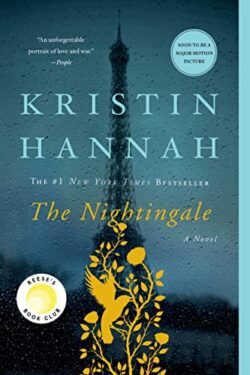
The Nightingale
“The Nightingale” by Kristin Hannah is a poignant and compelling novel set in France during World War II. It tells the story of two sisters, Vianne Mauriac and Isabelle Rossignol, who face the horrors of war under the Nazi occupation. Each sister embarks on her own path of resistance against the German forces, showcasing courage, resilience, and the power of the human spirit. The novel explores themes of survival, the bonds of family, and the role of women in war. Through the contrasting journeys of Vianne and Isabelle, Hannah provides a gripping look at the impact of war on individuals and the choices they make in the face of unimaginable adversity. Character Analysis Vianne Mauriac: Vianne, the older sister, is a teacher and mother living in the quiet town of Carriveau. Her character is initially marked by a desire for normalcy and safety for her family, but as the war encroaches on her life, she is forced to make difficult decisions to protect her children and help her community. Vianne’s evolution from a cautious and protective figure to a resilient survivor highlights her inner strength and the sacrifices she makes in the name of love and duty. Isabelle Rossignol: Isabelle, the younger sister, is fiery and rebellious, driven by a fierce desire to fight the German occupation. Her character embodies the spirit of resistance, and she becomes involved in an undercover operation to save Allied soldiers. Isabelle’s journey is one of heroism and defiance, showcasing her bravery and the impact one individual can have in the face of oppression. Themes and Analysis Resistance and Survival: The novel examines the various forms of resistance during war, from Isabelle’s direct involvement in espionage to Vianne’s quieter acts of defiance and protection. The Impact of War on Women: “The Nightingale” shines a light on the often-overlooked experiences of women during wartime, highlighting their strength, resilience, and contributions to the resistance. Family and Love: At its heart, the story is a testament to the enduring power of love and family bonds, even in the darkest times. The relationship between Vianne and Isabelle, strained at times, ultimately illustrates the unbreakable ties that bind them. “The Nightingale” by Kristin Hannah is a moving and powerful exploration of the human capacity for courage and resilience in the face of war’s devastation. The novel not only captures the historical context of World War II in France but also tells a timeless story of love, loss, and the indomitable spirit of women. Through the lives of Vianne and Isabelle, readers are offered a deeply affecting view of the complexities of survival and the choices that define us. “The Nightingale” is a tribute to the silent heroes of war, whose stories remind us of the light that can emerge from the darkness. If the summary caught your interest, Consider reading the full book on AbeBooks. Explore this book on AbeBooks
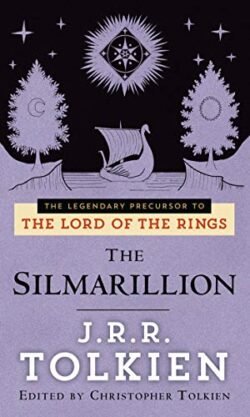
The Silmarillion: The legendary precursor to The Lord of the Rings
“The Silmarillion” by J.R.R. Tolkien, edited and published posthumously by his son Christopher Tolkien, is a monumental work of mythology that lays the foundation for the Middle-earth universe, setting the stage for “The Hobbit” and “The Lord of the Rings.” This collection of mythopoeic stories delves into the creation of the world, the rise and fall of its first peoples, the Elves and Men, and the epic tales of heroism, betrayal, and tragedy that define the ancient history of Middle-earth. “The Silmarillion” is not just a prelude to Tolkien’s more famous works but a rich, complex tapestry of lore and legend that offers readers a deeper understanding of his mythical world. Character Analysis While “The Silmarillion” encompasses a vast array of characters, a few key figures stand out for their significant roles in the narrative: Ilúvatar (Eru): Ilúvatar, or Eru, is the supreme deity who creates the universe and the Ainur, powerful spiritual beings, through his thought and music. His character represents the ultimate source of all creation and authority in Tolkien’s universe, embodying themes of divinity, fate, and free will. Melkor (Morgoth): Melkor, later known as Morgoth, is the first and most powerful of the Ainur created by Ilúvatar. His rebellion and desire to dominate and corrupt Middle-earth make him the primary antagonist. Melkor’s character explores themes of pride, envy, and the nature of evil. Fëanor: Fëanor is a pivotal Elf character, renowned for his craftsmanship and the creation of the Silmarils, three jewels of immense beauty and power. His oath to recover the Silmarils, which are stolen by Morgoth, sets off a chain of events marked by heroism and tragedy. Fëanor’s character delves into themes of obsession, loyalty, and the consequences of vengeance. Themes and Analysis Creation and Myth: “The Silmarillion” establishes the mythology of Middle-earth, exploring themes of creation, divine intervention, and the struggles between good and evil. Fate and Free Will: The narrative examines the tension between the predestined fate of the world and the characters’ free will, particularly in their capacity to resist or succumb to evil. Loss and Redemption: Throughout the stories, themes of loss, the pursuit of beauty and perfection, and the possibility of redemption resonate, reflecting the complexity of the moral and spiritual landscape of Middle-earth. “The Silmarillion” is a masterful work that enriches the lore of Middle-earth and deepens the reader’s appreciation for J.R.R. Tolkien’s imaginative world. Its tales of creation, divine drama, and the heroic sagas of Elves and Men offer a profound exploration of themes that resonate with human experience. This collection stands as a testament to Tolkien’s unparalleled skill in world-building and myth-making, inviting readers to lose themselves in the ancient history that underpins the beloved stories of “The Hobbit” and “The Lord of the Rings.” “The Silmarillion” is not only a prelude to these works but a monumental achievement in its own right, capturing the heart and soul of Tolkien’s legendarium. If the summary caught your interest, Consider reading the full book on AbeBooks. Explore this book on AbeBooks
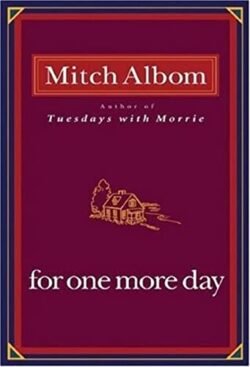
For One More Day
“For One More Day” by Mitch Albom is a deeply moving novel that explores the themes of forgiveness, redemption, and the enduring impact of parental love. The story revolves around Charles “Chick” Benetto, a former baseball player who, after hitting rock bottom in his personal and professional life, gets the chance to spend one more day with his deceased mother, Posey Benetto. This miraculous encounter offers Chick insights into his past, the opportunity to heal old wounds, and a second chance to make things right. Character Analysis Charles “Chick” Benetto: Chick is presented as a deeply flawed but ultimately sympathetic character grappling with the consequences of his life choices. A failed marriage, estranged relationship with his daughter, and a career that didn’t pan out as he hoped drive him to despair. His journey back from the brink is catalyzed by the supernatural opportunity to reconnect with his mother, prompting a profound exploration of his life’s missteps and misunderstandings. Posey Benetto: Posey, Chick’s mother, is the heart of the novel. In life, she was a hardworking single mother who faced societal judgment and personal sacrifices with resilience and love. In death, she becomes the embodiment of unconditional love and forgiveness, guiding Chick toward redemption and self-forgiveness. Her character illuminates the novel’s central message about the power of parental love and the possibility of second chances. Themes and Analysis Redemption and Forgiveness: The novel delves into the possibility of redemption, both self-imposed and offered by others. It suggests that forgiveness is a powerful force capable of healing and transforming lives. The Impact of Parental Love: Through Chick’s reflections and interactions with Posey, Albom examines the complexities of parent-child relationships, highlighting how parental love continues to influence individuals long after childhood. Reflection and Reconciliation: Chick’s journey is one of reflection, as he confronts his past actions and their repercussions. This process of reconciliation with his past and loved ones underscores the novel’s emphasis on understanding and healing. “For One More Day” by Mitch Albom is a poignant exploration of life’s regrets, the unbreakable bonds of family, and the healing power of love. Through the character of Chick Benetto, readers are invited to reflect on their relationships, mistakes, and the often-overlooked sacrifices of parents. Albom’s narrative weaves a tale of heartache and hope, demonstrating that it’s never too late to change the course of one’s life or to appreciate the people who shaped it. This novel resonates with anyone who has ever wished for just one more day with a loved one, offering a tender and powerful reminder of the significance of forgiveness and second chances. If the summary caught your interest, Consider reading the full book on AbeBooks. Explore this book on AbeBooks
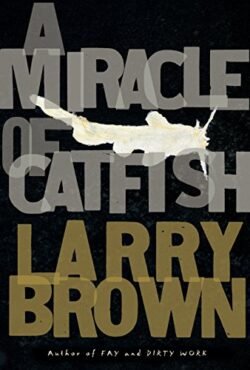
A Miracle of Catfish
“A Miracle of Catfish” is Larry Brown’s unfinished final novel, published posthumously in 2007. The novel is a vivid portrayal of life in the American South, weaving together multiple narratives that explore themes of family, poverty, and the struggles of the human condition. Brown’s distinctive storytelling and deep empathy for his characters shine through, even in the novel’s incomplete state, offering readers a glimpse into the lives of those on the fringes of society. Character Analysis Cody: A young boy longing for the father he never knew. Cody represents innocence and the desire for familial connection. His perspective provides insight into the challenges faced by children in broken homes. Jimmy: Cody’s father, a flawed man struggling with his own demons and the desire to do right by his son. Jimmy embodies the theme of redemption and the complexities of parental responsibility. Mr. Gilly: An elderly man who forms a bond with Cody. Mr. Gilly’s character explores themes of aging, wisdom, and the importance of cross-generational relationships. Themes and Analysis The novel delves into the harsh realities of life in the American South, highlighting themes of poverty, family dynamics, and the longing for connection. Brown’s characters are deeply flawed yet inherently sympathetic, illustrating the duality of human nature. The unfinished nature of the book adds a layer of poignancy, leaving readers to ponder the untold futures of its characters. “A Miracle of Catfish” stands as a testament to Larry Brown’s talent for capturing the heart and soul of the South. Though the novel remains unfinished, it offers a powerful exploration of life’s complexities and the enduring strength of the human spirit. Brown’s ability to create rich, believable characters and his unflinching examination of their struggles make the novel a compelling read, inviting readers to reflect on the themes of redemption, family, and the search for meaning in a challenging world. The book serves as a fitting tribute to Brown’s legacy, showcasing his profound understanding of the human condition and his unwavering compassion for those living on the margins of society. If the summary caught your interest, Consider reading the full book on AbeBooks. Explore this book on AbeBooks
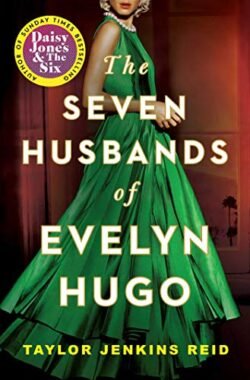
The Seven Husbands of Evelyn Hugo
“The Seven Husbands of Evelyn Hugo” by Taylor Jenkins Reid is a captivating novel that delves into the life of fictional Hollywood icon, Evelyn Hugo, as she recounts the tale of her glamorous and tumultuous life to journalist Monique Grant. Through the lens of her seven marriages, the novel explores themes of love, identity, ambition, and the search for authenticity in a world obsessed with appearances. Character Analysis Evelyn Hugo: Evelyn Hugo, the protagonist, is a complex character whose beauty and intelligence catapult her to fame in the golden age of Hollywood. Despite her success and public adoration, Evelyn’s personal life is marked by struggles with her identity, the sacrifices she makes for her career, and her quest for true love amidst a series of marriages that serve various purposes—some for love, some for convenience, and some for protection. Evelyn’s character study reveals the cost of fame and the often-painful compromises one must make in pursuit of their ambitions and desires. The Husbands: Each of Evelyn’s seven husbands represents different facets of her life and the entertainment industry’s evolution. From her first husband, Ernie Diaz, who provides her an escape from an abusive father, to Harry Cameron, her closest confidant and truest friend, and finally to Max Girard, who offers her the dream of real love, these men reflect the societal expectations and personal choices Evelyn navigates. Their characters not only contribute to Evelyn’s story but also serve as a commentary on the roles men played in the lives of Hollywood actresses during this era. Monique Grant: Monique Grant is a young journalist chosen by Evelyn to write her biography. As she listens to Evelyn’s story, Monique confronts her own issues regarding her career, relationships, and self-worth. The parallel between Monique’s life and Evelyn’s serves to bridge generations, illustrating that the struggles women face in personal and professional realms remain relevant. Monique’s character growth is propelled by Evelyn’s revelations, leading to transformative decisions about her future and understanding of her own identity. Themes and Analysis The novel explores themes of ambition, identity, love, and the dichotomy between public image and private reality. Through Evelyn’s life story, Reid comments on the cost of fame, the sacrifices made by women to succeed in a male-dominated industry, and the courage required to live authentically. The narrative also addresses issues of racial and sexual identity, reflecting on the societal norms and constraints of different eras. “The Seven Husbands of Evelyn Hugo” is a compelling narrative that combines elements of historical fiction, romance, and drama to weave a rich tapestry of human experience. Taylor Jenkins Reid offers readers a glimpse into the glamorous yet tumultuous life of a Hollywood icon, while presenting a poignant commentary on the complexities of love, identity, and the pursuit of happiness. Through the intertwined lives of Evelyn, her husbands, and Monique, the novel reveals the universal struggles of seeking acceptance and meaning in a world that often values appearance over authenticity. Evelyn Hugo’s story is a testament to the enduring power of love and the strength required to forge one’s path, making it a deeply moving and unforgettable read. If the summary caught your interest, Consider reading the full book on AbeBooks. Explore this book on AbeBooks

Shadow of a Century
The narrative alternates between the events of 1916, centered around the Easter Rising, and Ireland in the year 2016, where a New York-based reporter named Mary finds herself drawn into a compelling assignment in Ireland. The assignment leads her to uncover the story of a century-old flag, a relic from the Easter Rising, which has profound personal significance for an elderly Irish woman named Eileen. As Mary delves deeper into Eileen’s story and the history of the flag, she discovers the life of Scarlett, a young woman who played a crucial role in the 1916 events. “Shadow of a Century” captures the spirit and struggle of the Irish people during one of the most pivotal moments in their history, while also exploring the impact of those events on future generations. The novel skillfully portrays the complexity of Ireland’s fight for independence, the sacrifices made by its people, and the personal dramas that unfold against the backdrop of Character Analysis Scarlett: Scarlett is a young and brave woman living during the 1916 Easter Rising, an active participant in the struggle for freedom and independence among a group of Irish. From a character analysis perspective, Scarlett embodies themes of sacrifice, courage, and the pursuit of justice. Her story paints a portrait of a strong woman resisting the political and social pressures of her time. Eileen: Eileen is an elderly woman living in the contemporary segment of the story, a century after Scarlett’s time. She has a deep connection to Scarlett and collaborates with Mary to unravel the mysteries of the past. Eileen’s character explores themes of reconciling with the past, legacy, and the power of memory. Through her own story and connection to Scarlett, she emphasizes the importance of confronting history and learning from it. Mary: Mary is a journalist living in New York in the modern part of the book. She meets Eileen on an assignment in Ireland and begins to uncover Scarlett’s story. Mary’s character reflects themes of discovery, personal growth, and self-discovery. As she investigates events from a century ago, Mary also searches for meaning and purpose in her own life. Her interactions with the stories of Eileen and Scarlett prompt her to reassess her own identity and connection to her past. Themes and Analysis Historical and Political Turmoil: The book provides a vivid portrayal of Ireland’s fight for independence and the personal cost of political conflict. Interconnected Lives: It highlights how the actions of individuals in the past have lasting effects on future generations, showcasing the interconnectedness of human lives across time. Identity and Heritage: The story explores the importance of understanding one’s heritage and history, as the characters grapple with their identities in the context of Ireland’s tumultuous past. “Shadow of a Century” by Jean Grainger is a compelling tale that brings to life a critical period in Irish history through the personal stories of its characters. By intertwining the past with the present, Grainger not only pays homage to Ireland’s struggle for independence but also explores the broader themes of memory, heritage, and the unbreakable bonds that connect us across time. The novel is a testament to the resilience of the human spirit and the enduring quest for freedom and justice. Through its richly drawn characters and meticulously researched historical backdrop, “Shadow of a Century” offers readers a deeply moving and insightful look into Ireland’s heart and soul, making it a must-read for fans of historical fiction. If the summary caught your interest, Consider reading the full book on AbeBooks. Explore this book on AbeBooks

Like Water for Chocolate
The novel is structured around twelve sections, each representing a month of the year and beginning with a Mexican recipe that is integral to the story’s plot for that month. Tita’s emotions are magically infused into her cooking, influencing those who consume her dishes in profound and often unexpected ways. As Tita struggles with her forbidden love for Pedro, who marries her sister Rosaura to stay close to her, the kitchen becomes her sanctuary and the medium through which she expresses her passion and creativity. The narrative weaves together the personal and the political, setting Tita’s love story against the backdrop of the Mexican Revolution. The novel is rich with themes of tradition vs. modernity, the role of women in society, and the conflict between personal desires and familial obligations. Tita’s journey is one of self-discovery and empowerment, as she navigates the challenges posed by her family’s expectations and society’s norms. Themes and Analysis Magical Realism and the Power of Food: The novel uses magical realism to illustrate how Tita’s cooking has the power to evoke deep emotions, alter moods, and even change the course of events. Love and Sacrifice: Central to the novel is the theme of love—its transformative power, its obstacles, and the sacrifices it often requires. Tradition vs. Freedom: The story explores the tension between adhering to family traditions and pursuing personal freedom and happiness. “Like Water for Chocolate” is a unique and enchanting novel that blends romance, magical realism, and culinary arts to tell a deeply emotional and sensual story. Laura Esquivel’s work is a tribute to the power of food as a means of expression and connection, transcending the ordinary to touch the hearts and souls of readers. Through Tita’s journey, the novel celebrates the pursuit of love and the quest for personal freedom, challenging traditional constraints and highlighting the role of women as bearers of culture and change. It’s a compelling narrative that captures the complexities of human emotions, the binding force of family ties, and the liberating potential of culinary magic. If the summary caught your interest, Consider reading the full book on AbeBooks. Explore this book on AbeBooks
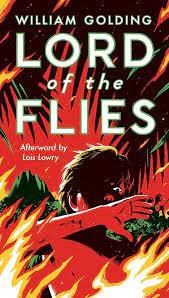
Lord of the Flies
The story opens with the boys’ arrival on the island, where they elect Ralph as their leader, with the intellectual Piggy as his adviser. Ralph’s initial attempts to maintain order and civility are symbolized by the conch shell, used to call meetings and uphold democratic processes. However, Jack, the head of the choirboys turned hunters, becomes increasingly obsessed with hunting and power, challenging Ralph’s authority and advocating for a more primal existence focused on survival and the hunt. The boys’ fear of a supposed beast on the island exacerbates their descent into savagery. Simon, a sensitive boy who questions the group’s fear, discovers that the beast is, in fact, a dead parachutist from a nearby plane crash. However, when he attempts to reveal this truth, he is brutally killed by the boys in a frenzied ritual dance. This marks a turning point, leading to further violence and the complete breakdown of social order. Ralph and Piggy’s attempts to restore order are futile, and the conflict with Jack’s faction escalates. The novel reaches its climax with the murder of Piggy and the hunters’ relentless pursuit of Ralph, intending to kill him. The narrative concludes with the arrival of a naval officer, who rescues the boys. The sight of the officer prompts a sudden return to civilization’s reality, and the boys, confronted with the consequences of their actions, break down in tears. Character Analysis Ralph: Represents order, leadership, and civilization. Ralph’s struggle to maintain calm and rational governance on the island mirrors the challenges of establishing and upholding democratic principles. Piggy: Symbolizes intellect and reason. Despite his valuable insights, Piggy’s physical appearance and lack of charisma make him an outsider, illustrating the fragile nature of wisdom and rationality in the face of mob mentality. Jack: Embodies savagery, the lust for power, and the primal instincts within humanity. His character’s evolution from a disciplined choirboy to a ruthless tribal leader highlights the ease with which civilized behavior can be shed. Simon: Represents innocence and the moral compass of the group. Simon’s interactions with the natural world and his eventual death underscore the novel’s themes of the loss of innocence and the inherent evil within humanity. One of the novel’s most poignant quotes is by Piggy: “Which is better – to have rules and agree, or to hunt and kill?” This question encapsulates the central conflict of the novel, the tension between civilization and savagery, and the choices that define our humanity. In conclusion, “Lord of the Flies” by William Golding offers a bleak yet insightful commentary on the human condition. Through the microcosm of a society of stranded boys, Golding explores profound questions about the nature of evil, the complexities of leadership, and the fragile veneer of civilization. The novel remains a compelling study of the darkness that lies within each person and the societal constructs that hold this darkness at bay. If the summary caught your interest, Consider reading the full book on AbeBooks. Explore this book on AbeBooks