
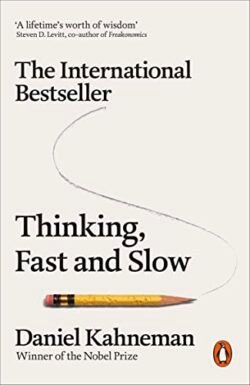
“Thinking, Fast and Slow” by Daniel Kahneman, published in 2011, is a landmark book that explores the two systems of thought that drive the way we think and make decisions. Kahneman, a Nobel Prize-winning psychologist, delves into the dual-process model of the mind, distinguishing between System 1—fast, intuitive, and emotional thought—and System 2—slower, more deliberative, and more logical thought. Through a series of engaging examples and insightful analyses, Kahneman demonstrates how these two systems shape our judgments and decisions, often leading to biases and errors in our thinking. The book covers a wide range of cognitive biases and heuristics that influence our behavior, from the anchoring effect to the overconfidence bias, and discusses their implications for personal decision-making, business, and public policy.
Character Analysis
- As a non-fiction exploration of psychological principles, "Thinking, Fast and Slow" does not feature characters or a narrative arc. Instead, Daniel Kahneman himself acts as the guide, sharing his extensive research and personal reflections to illuminate the workings of the human mind. His authoritative yet accessible presentation of complex ideas invites readers into a deep examination of their own thought processes.
Themes and Analysis
- Dual-Process Theory: A central theme is the distinction between the fast, instinctual reactions of System 1 and the slow, reasoned analyses of System 2, and how these systems interact to influence our thinking and decision-making.
- Cognitive Biases: Kahneman explores various cognitive biases that arise from our reliance on System 1 thinking, demonstrating how they can lead to systematic errors in judgment.
- The Limits of Intuition: The book challenges the notion that intuition is always trustworthy, highlighting situations where our instincts can lead us astray and the importance of engaging System 2 to check those instincts.
- Rationality and Happiness: Kahneman also delves into the relationship between decision-making and happiness, questioning the rationality of human choices in the pursuit of well-being.
“Thinking, Fast and Slow” is a profound contribution to our understanding of the mind, offering invaluable insights into the cognitive processes that underlie human thought and behavior. Kahneman’s work is not only a testament to the complexities of the mind but also serves as a practical guide for improving decision-making in our personal and professional lives. By bringing awareness to the biases and heuristics that influence our thinking, the book empowers readers to think more critically and make better choices. Its interdisciplinary approach makes it a seminal text in psychology, economics, and beyond, appealing to a broad audience interested in the intricacies of human cognition and the science of decision-making.
If the summary caught your interest,
Consider reading the full book on AbeBooks.
Explore this book on AbeBooks