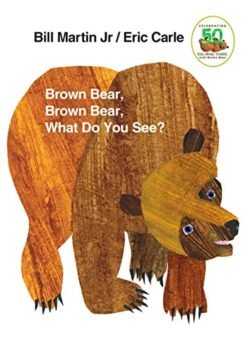
“Brown Bear, Brown Bear, What Do You See?” is a classic children’s picture book written by Bill Martin Jr. and illustrated by Eric Carle, first published in 1967. This beloved book uses a repetitive and rhythmic question-and-answer pattern that makes it an ideal read for young children and beginning readers. The story features a series of animals, including a brown bear, a red bird, a yellow duck, and a green frog, among others, each asking the next animal in line what they see. This simple, predictable pattern helps children anticipate what comes next, engaging them in the reading process and encouraging participation.
The vivid and colorful collage illustrations by Eric Carle have become iconic, capturing the imagination of young readers and complementing the text’s rhythmic cadence. The book not only introduces children to different animals and colors but also fosters early literacy skills, visual recognition, and memory.
Themes and Analysis
- Animal and Color Recognition: Through its repetitive structure, the book teaches children about various animals and their colors, promoting early learning and concept recognition.
- Rhythmic Language: The use of rhythmic, repetitive language aids in language development, helping children to build vocabulary and understand sentence structure.
- Engagement and Participation: The predictable pattern encourages children to participate in the reading process, making it an interactive experience that fosters a love for reading.
“Brown Bear, Brown Bear, What Do You See?” remains a staple in children’s literature, beloved by generations for its simplicity, educational value, and the beauty of its illustrations. Bill Martin Jr.’s engaging text and Eric Carle’s distinctive artwork create a perfect synergy that has made this book a timeless classic. Ideal for reading aloud, it continues to be a favorite choice for parents, teachers, and librarians for introducing young children to the joys of reading and the natural world.
If the summary caught your interest,
Consider reading the full book on AbeBooks.
Explore this book on AbeBooks